I get a particular kind of phone call at least twice a month during lambing season. A farmer or trialler rings up and says something like, “The dog’s gone lame. Wasn’t hit by anything, just pulled up wrong. Reckon it’ll sort itself out?”
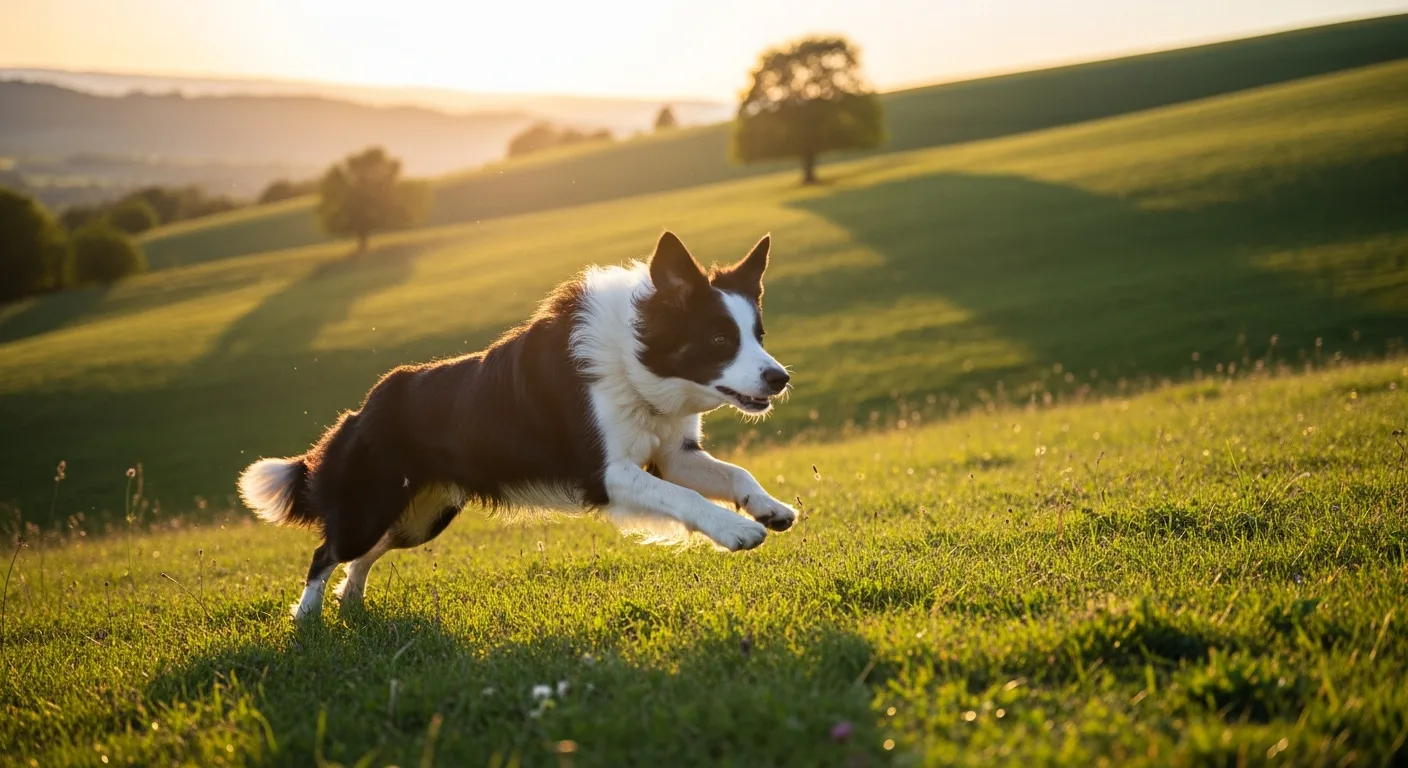
Sometimes it does. Often it doesn’t. And the difference between the two outcomes usually depends on what happens in the first 48 hours.
Working herding dogs are athletes. Not in the pampered, managed, human-sport-science sense - in the raw, explosive, repetitive-strain sense. A Border Collie working sheep on hill ground covers enormous distances at speed, with constant directional changes, sudden stops, and bursts of acceleration that would make a sprinter wince. The physical demands are relentless, and the dogs rarely complain until something is properly wrong.
After 25 years of putting these dogs back together, I’ve learned a fair bit about what breaks them and what keeps them sound.
The Injuries Nobody Sees Coming
The dramatic injuries - the kicked ribs, the wire cuts, the broken legs - those are obvious. You deal with them as emergencies and everyone knows something happened. What catches people out are the soft tissue injuries: the strains, sprains, and overuse conditions that develop gradually and then suddenly become a problem.
Iliopsoas Strain
This is probably the most underdiagnosed injury in working dogs. The iliopsoas is a deep hip flexor muscle that connects the spine to the femur. It’s heavily involved in rear limb drive - the explosive push-off that herding dogs use hundreds of times a day.
Signs are subtle at first. The dog might be slightly short-strided behind. They might sit with one leg kicked out to the side rather than squarely underneath them. They might be reluctant to jump but still willing to run. Owners often describe it as “a bit stiff” or “not quite right.”
By the time the dog is properly lame, the injury has usually been developing for weeks. The muscle is chronically strained, inflamed, and sometimes partially torn.
I’ve seen more iliopsoas injuries missed by vets than almost any other condition. The problem is that standard orthopaedic examination - flexion, extension, drawer tests - often comes up normal because the issue isn’t in the joint. You have to specifically palpate the iliopsoas insertion on the lesser trochanter, and the dog has to be relaxed enough to let you. A tense working Collie in a vet surgery is not an easy patient for this assessment.
Shoulder Injuries
The shoulder is a common injury site in herding breeds because it absorbs so much of the deceleration force when a dog stops suddenly. The supraspinatus tendon, which runs over the top of the shoulder joint, is particularly vulnerable.
Supraspinatus tendinopathy presents as a forelimb lameness that’s worse after rest and improves with gentle movement. Sound familiar? It looks exactly like arthritis, which is why it gets misdiagnosed constantly.
The distinction matters because the treatment approach differs. Arthritis management focuses on anti-inflammatories and joint support. Tendinopathy needs controlled exercise rehabilitation, often with therapeutic ultrasound or shockwave therapy, and rest from the specific activities that aggravate it.
Carpal Hyperextension
Working dogs that spend time on rough, uneven ground put enormous strain through their carpi (wrists). Over time, the palmar ligaments that support the carpus can stretch or partially tear, leading to a progressive dropping of the wrist angle.
In mild cases, you’ll notice the dog’s carpus flexing more than it should when they walk - the foot seems to sink slightly at the wrist on weight-bearing. In severe cases, the dog is walking on the back of the carpus, which is a surgical problem.
Early-stage carpal hyperextension responds reasonably well to support wrapping and activity modification. Advanced cases need arthrodesis - surgical fusion of the joint - which is a significant procedure but generally has good outcomes in working dogs.
Why Herding Breeds Are Particularly Vulnerable
It’s not just the work that makes these dogs prone to exercise injuries. There are breed-specific factors at play.
Body mechanics. Herding breeds are built for speed and agility rather than sustained force. Their relatively light frames, long limbs, and flexible spines give them their characteristic athleticism but also create leverage points where injuries concentrate. A Border Collie’s low “herding crouch” puts specific stress on the lumbar spine and hip flexors that upright breeds simply don’t experience.
Drive and stoicism. These dogs don’t stop when something hurts. They’ve been selected for generations to push through discomfort and keep working. A Labrador with a sore shoulder might limp and look miserable. A Collie with the same injury will keep running sheep and compensate in ways that create secondary problems elsewhere.
Repetitive loading. The nature of herding work means the same movements are repeated thousands of times. Outrun, approach, drive, shed - the biomechanical pattern is remarkably consistent, and the same structures absorb the load every time. It’s the canine equivalent of a repetitive strain injury.
Genetic factors. Some lines within breeds are more prone to soft tissue injuries than others. This is partly about conformation - dogs with straighter rear angulation or upright shoulders may be less mechanically efficient and more injury-prone. It’s the same principle that makes comprehensive health screening important: structural soundness matters for longevity, not just for aesthetics.
The First 48 Hours
What you do immediately after an injury has an outsized effect on recovery time. Get this right and you might save weeks of rehabilitation. Get it wrong and a minor strain becomes a chronic problem.
Rest. Real rest, not “I’ll just use him for light work.” Complete rest from all working activity. Lead walks for toileting only. This is brutally hard for owners of keen working dogs, but it’s non-negotiable.
Cold therapy. Ice packs applied to the affected area for 15-20 minutes, three to four times daily, for the first 48-72 hours. Wrap the ice pack in a thin towel to prevent skin damage. Cold reduces inflammation and pain in the acute phase.
Controlled movement. After the first 48 hours, gentle controlled lead walking is usually better than complete immobility. Five-minute walks, three times daily, gradually increasing. The goal is to maintain some blood flow and prevent stiffness without stressing the injured tissue.
Veterinary assessment. If lameness persists beyond 48 hours or is severe from the outset, get it examined. The earlier an injury is properly diagnosed, the better the outcome. I’d rather see a dog with a mild strain I can advise on than one with a chronic tear that’s been “rested” for three months without improvement.
Conditioning: The Bit Everyone Skips
Here’s the uncomfortable truth: most exercise-induced injuries in working dogs are at least partly preventable through proper conditioning. And almost nobody does it.
Farmers and triallers tend to think their dogs are fit because they work. But working fitness and injury-resistant fitness aren’t the same thing. A dog can be cardiovascularly fit from regular work and still have weak stabilising muscles, poor flexibility, and inadequate core strength.
Warm-up. Five minutes of gentle trotting before asking a dog to work flat out. I know this sounds ridiculous on a farm where you just open the door and the dog goes. But the number of injuries I see that happen in the first ten minutes of cold work is striking.
Cross-training. Swimming, if you have access to it, is superb for building muscle without joint impact. Even walking on varied terrain - sand, gentle hills, rough ground - builds stabilising muscles in ways that flat field work doesn’t.
Core strengthening. There are simple exercises - walking over cavaletti poles, balancing on unstable surfaces, controlled sit-to-stand repetitions - that build the core and stabilising muscles. Physiotherapists who work with dogs can design specific programmes. It feels like a lot of effort until you compare it with six weeks off work for a preventable injury.
Recovery management. Dogs that work hard need adequate recovery time. A dog that works sheep all day Saturday shouldn’t be doing agility all day Sunday. This seems obvious written down, but I see it constantly - owners who can’t resist using a keen dog and wonder why it breaks down.
When Injuries Become Chronic
The injuries I dread aren’t the acute ones. It’s the chronic, recurring soft tissue problems that keep coming back because the underlying cause was never addressed.
A typical pattern: dog strains a muscle, owner rests it for a week, dog seems better, goes back to work, re-injures within days. Repeat three or four times and you’ve got scar tissue forming in the muscle, altered movement patterns, compensatory injuries in other limbs, and a dog that’s never quite sound.
Breaking this cycle usually requires proper veterinary diagnosis (often including ultrasound imaging of the soft tissues), structured rehabilitation with a qualified canine physiotherapist, and a genuinely gradual return to work that owners find agonisingly slow.
For older working dogs, chronic soft tissue injuries layer on top of age-related changes - arthritis, decreased muscle mass, slower healing - creating a compounding problem that needs careful management. An eleven-year-old Collie with a chronic iliopsoas strain and bilateral hip arthritis needs a fundamentally different approach than a three-year-old with the same muscle injury.
The Role of Surface and Terrain
Something I don’t think gets discussed enough is the impact of working surface on injury risk.
Dogs working on hard, dry ground in summer are at significantly higher risk of concussive injuries - think stress fractures, joint inflammation, and tendon damage from impact. The same dogs on soft ground in spring have more traction-related injuries - strains and tears from slipping or from the extra effort of running on soft footing.
Frozen ground in winter is probably the worst combination: hard enough for concussive damage and slippery enough for traction injuries. The number of muscle strains I see in January and February when dogs are working on frozen fields is consistently higher than any other time of year.
There’s not much you can do about the weather, obviously. But being aware of the increased risk means you can adjust workload, warm up more thoroughly, and watch more carefully for early signs of trouble.
Joint Supplements and Working Dogs
I get asked about joint supplements constantly. Glucosamine, chondroitin, green-lipped mussel, turmeric - the list grows every year.
My honest assessment: omega-3 fatty acids have the best evidence base for joint and soft tissue health. They have genuine anti-inflammatory properties, and the research on their benefits for joint health is more convincing than for most other supplements. I recommend them for all working dogs over five, regardless of whether they’re showing any signs of problems. I’ve reviewed the full supplement landscape in detail in my piece on joint supplements — what the evidence actually says — worth reading before spending money on anything.
Glucosamine and chondroitin are in the “probably doesn’t hurt, might help modestly” category. I don’t discourage owners from using them, but I don’t promise miracles either.
Everything else - turmeric, CBD, various herbal formulations - is either under-researched or has evidence so weak that I can’t recommend it with any confidence. That doesn’t mean it doesn’t work. It means we don’t know if it works, and there’s a difference.
What Good Management Looks Like
The best-managed working dogs I see share certain characteristics:
Their owners treat them as athletes, not as tools. They pay attention to condition, adjust workload, and take early signs of lameness seriously.
They get regular veterinary check-ups that include musculoskeletal assessment - not just the standard jab-and-go annual visit.
They understand that fitness for work includes conditioning, not just working. A dog that does nothing all week and then works flat out on weekends is a dog waiting to get injured.
They maintain their dogs at appropriate body weight. Carrying extra weight increases load on joints and soft tissues with every stride. This applies to working dogs just as much as pets — I’ve seen working Collies that were genuinely overweight because their owners assumed working dogs couldn’t be fat. The relationship between weight and injury risk is direct enough that I’ve written a dedicated piece on weight management in working shepherds — it’s probably the most cost-effective intervention most working dog owners aren’t taking seriously enough.
And they know when to stop. The hardest thing for someone with a keen working dog is to pull them off work when they’re still eager. But a dog that’s been working for six hours doesn’t know it should stop. That’s your job.
The Investment in Prevention
I’ll close with a calculation that usually gets people’s attention.
A comprehensive veterinary assessment and physiotherapy consultation for a working dog costs perhaps 200-300 pounds. A conditioning programme takes 15-20 minutes of your time daily.
Surgery for a ruptured cruciate ligament costs 2,000-4,000 pounds plus months of rehabilitation. A chronic soft tissue injury that ends a working career early costs you every lamb that dog would have gathered for the next five years.
Prevention isn’t glamorous. It doesn’t feel urgent. Nobody’s ever praised for an injury that didn’t happen. But the maths is clear, and the dogs deserve better than being run until they break.
These are exceptional animals doing exceptional work. The least we can do is look after the bodies that make it possible.