A sheepdog’s eyes are their primary working tool. They gather sheep with their gaze before their legs have moved an inch. The Border Collie “eye” — that intense, crouching, staring approach — is a genetic trait selected over generations precisely because visual acuity and intensity matter for herding work.
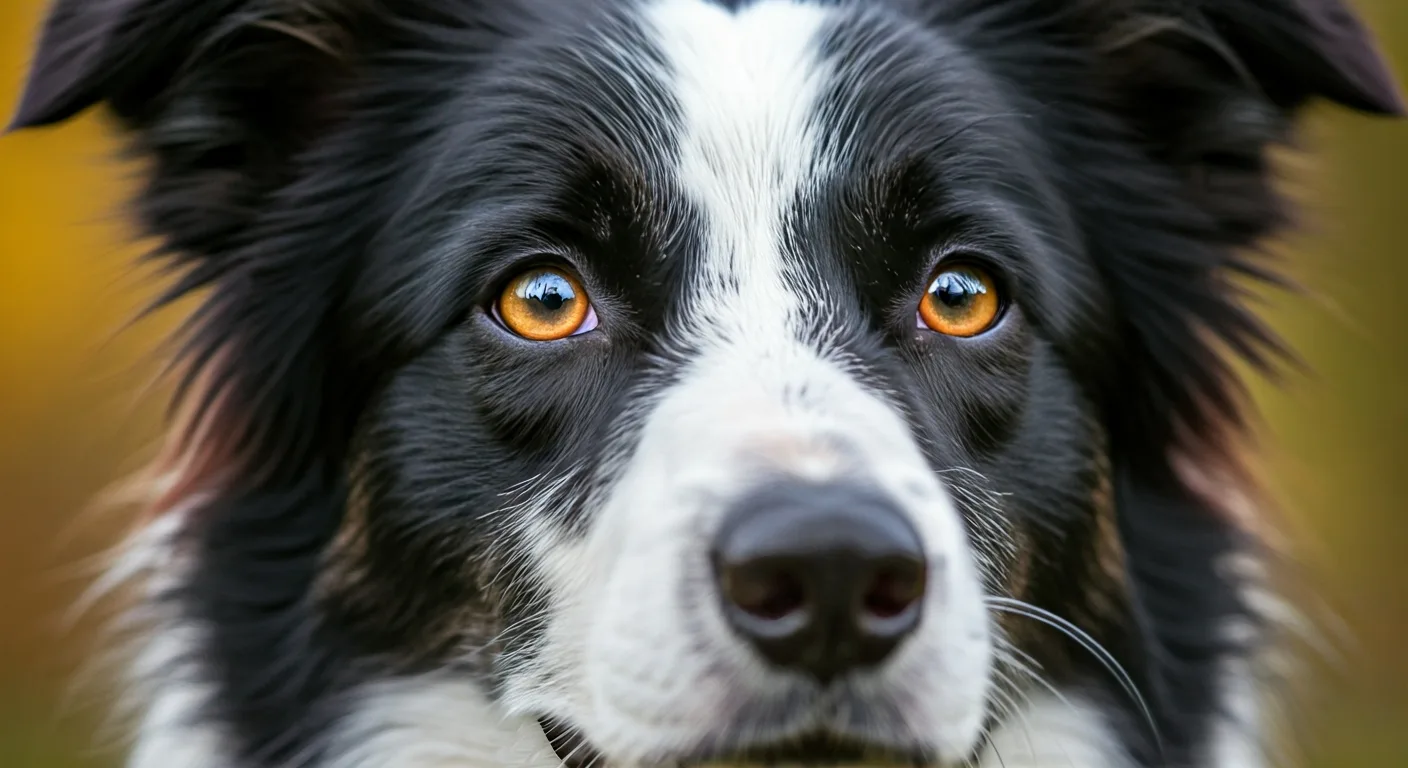
Which makes inherited eye disease in herding breeds something more than a health statistic. It’s a direct threat to what these dogs are built to do.
I’ve been examining herding breed eyes for a long time and the range of conditions I see is wide enough to fill a textbook. What I want to do here is cover the most practically important ones — what they are, what to watch for, and what testing actually tells you.
The Eye Testing Landscape
Before diving into specific conditions, it’s worth understanding how eye health is monitored in herding breeds.
In the UK, the British Veterinary Association and Kennel Club operate an eye scheme through which qualified veterinary ophthalmologists examine dogs for a range of inherited conditions. The examination is clinical — a physical examination of the eye using specialist equipment. It can detect conditions that are already present but cannot predict future development of conditions that appear late in life.
DNA testing is available for a subset of inherited eye diseases. This is different from the clinical examination: a DNA test identifies whether a dog carries specific genetic variants, regardless of whether those variants are currently causing observable disease. For late-onset conditions like progressive retinal atrophy, DNA testing is particularly valuable because it can identify affected or carrier dogs before any clinical signs appear.
The practical advice: herding breed dogs used for breeding should have both a current clinical eye examination and relevant DNA tests for their breed. These are complementary tools, not alternatives.
Collie Eye Anomaly
Collie Eye Anomaly (CEA) is one of the most common inherited eye conditions in herding breeds. It’s present at birth and affects the choroid — the layer of blood vessels and tissue behind the retina.
The spectrum of severity varies widely:
Choroidal hypoplasia: The mildest form, involving underdevelopment of the choroid without direct impact on vision. Many affected dogs have this form and are functionally visual throughout their lives. Interestingly, this form can become “masked” by pigment as puppies age — a dog that tested affected as a puppy may appear normal at an adult eye examination if the affected area has become pigmented. This is why CEA testing should be done before eight weeks if done clinically.
Colobomas: Pits or holes in the eye structures — optic disc colobomas, chorioretinal colobomas. More significant than simple choroidal hypoplasia. Whether they affect vision depends on their location and size.
Retinal detachment and haemorrhage: The most severe manifestation. Detachment of the retina causes blindness in the affected eye. Haemorrhage within the eye can cause acute vision loss. These occur in a minority of affected dogs but can happen at any age in a dog with CEA.
CEA is inherited as a recessive trait — a dog needs two copies of the affected gene to have the condition. Carriers (one copy) are clinically normal. DNA testing distinguishes between normal, carrier, and affected dogs.
In Rough and Smooth Collies, the carrier rate for CEA is very high — some studies suggest the majority of the breed carries at least one copy. This makes complete elimination of the gene essentially impossible without catastrophically restricting the gene pool. Responsible breeding aims to avoid producing severely affected offspring (those likely to have detachments or haemorrhages) while accepting that mildly affected dogs may continue to be bred from, particularly when other health qualities are excellent.
In Border Collies, CEA is also present but at lower rates. DNA testing is available and used by serious breeders.
Progressive Retinal Atrophy
Progressive Retinal Atrophy (PRA) is not one condition but a family of inherited diseases with a common outcome: progressive degeneration of the photoreceptor cells in the retina, leading eventually to blindness.
The trajectory typically follows this pattern:
Night blindness first. The rod cells, responsible for low-light vision, degenerate before the cones. Dogs become reluctant to go out in the dark, hesitate at dimly lit doorways, seem uncertain in unfamiliar environments after dusk. Many owners initially attribute this to anxiety or age-related cognitive changes.
Day vision progressively affected. As the condition advances, cone cells are also lost. Vision in good light begins to deteriorate. The dog may misjudge distances, become less confident in busy environments, stop catching thrown items it would previously have snatched from the air without effort.
Complete blindness. The end-stage is typically complete blindness, though the timeline varies. Some forms of PRA are early-onset and progress rapidly; others develop slowly across many years.
For herding breeds specifically, PRA is perhaps the most professionally heartbreaking condition I deal with. A working dog losing its vision cannot do the work it was built for. The loss is functional as well as clinical.
Several genetic forms of PRA affect herding breeds. Border Collie owners should be aware of the CNGA1-associated form — a recessive condition for which DNA testing is available. Australian Shepherds are affected by a different genetic variant. The forms of PRA in different breeds are genetically distinct, so a test valid for one breed isn’t necessarily informative for another.
All breeding animals in affected breeds should be DNA tested for PRA variants known in their breed. A dog that’s clinically unaffected at age three or four can still carry the genes and produce affected offspring.
Multifocal Retinopathy
Canine Multifocal Retinopathy (CMR) causes focal lesions — patchy areas of abnormal tissue — on the retina. It’s seen in several herding breeds, including Australian Shepherds and English Shepherds.
The condition often looks more alarming on examination than it turns out to be functionally. Many affected dogs have minimal impact on vision and function normally throughout their lives. However, affected individuals can produce affected offspring, and severe forms can cause meaningful vision impairment.
DNA testing is available and separates normal, carrier, and affected dogs.
Cataracts: Inherited vs. Acquired
Cataracts — opacification of the lens — can be inherited or acquired. The distinction matters clinically and for breeding decisions.
Inherited cataracts in herding breeds are well-documented, particularly in Australian Shepherds, Border Collies, and Staffordshire Bull Terriers (not a herding breed, but relevant to the DNA testing discussion). They typically appear earlier in life than cataracts caused by age, metabolic disease, or trauma, and affect both eyes, though not always symmetrically.
In older dogs, what looks like cataracts may actually be nuclear sclerosis — a normal age-related change in lens density that gives the eyes a bluish haze without significantly affecting vision. This is distinct from true cataracts and doesn’t require treatment. I see it in most dogs over eight years old to some degree.
True cataracts cause vision impairment proportional to the density and location of the opacity. Surgical treatment — phacoemulsification and lens implantation — is available and effective at specialist centres. The outcome depends on the health of the rest of the eye; cataracts in an eye with concurrent retinal disease have a worse surgical prognosis.
Glaucoma
Glaucoma, an increase in intraocular pressure that damages the optic nerve, can be primary (inherited structural abnormalities in the drainage angle of the eye) or secondary (resulting from inflammation, lens luxation, or other problems).
Primary glaucoma is seen in several herding breeds, though it’s less common than the conditions listed above. It’s worth knowing about because it can present acutely — a dog with a suddenly painful, red, cloudy eye that may be vomiting and clearly distressed. Acute angle-closure glaucoma is a veterinary emergency. If you see this, don’t wait to see if it improves. The optic nerve sustains permanent damage quickly under elevated pressure.
Chronic glaucoma is more insidious — gradual vision loss, subtle eye changes, mild discomfort. Gonio examination (looking at the drainage angle of the eye) by an ophthalmologist can identify predisposed individuals in some breeds before clinical disease develops.
Lens Luxation
The lens is held in position within the eye by fibres called zonules. When these fibres weaken or tear, the lens can shift position — subluxation if partial, luxation if complete.
Lens luxation causes serious problems: acute glaucoma, inflammation, vision loss. A luxated lens requires urgent veterinary attention.
Primary lens luxation, caused by an inherited weakness of the zonular fibres, is particularly associated with Terrier breeds but occurs in herding dogs as well. Secondary lens luxation can occur in any dog after trauma or chronic inflammation.
DNA testing for primary lens luxation is available and should be considered in herding breeds where the condition is known to occur.
What Regular Eye Examinations Actually Catch
I want to be honest about the limitations here, because this is an area where owner expectations sometimes don’t match the reality of clinical examination.
A clinical eye examination by a qualified ophthalmologist using specialist equipment can identify conditions that are currently present and visible. It cannot:
- Tell you whether your dog carries genes for conditions that haven’t yet developed
- Guarantee that conditions not visible today won’t develop in future
- Detect every form of inherited eye disease in every breed
This is why DNA testing and clinical examination work together rather than either being sufficient alone. For late-onset conditions, DNA testing gives you information that clinical examination cannot provide until the disease is already established.
Annual eye examinations for breeding dogs are standard practice in most responsible breeding programmes. This is particularly relevant once dogs are in their senior years, when conditions like cataracts, glaucoma, and retinal degeneration may first appear — and when managing other aspects of senior dog health means eye health needs monitoring alongside everything else.
The Owner’s Role
Between veterinary examinations, you’re the most important observer of your dog’s vision. Here’s what I ask owners to watch for:
Hesitation in low light. As noted with PRA, night blindness is often the earliest sign. A dog that suddenly doesn’t want to go out in the garden after dark, or hesitates at the top of unfamiliar stairs, may have early retinal disease.
Changes in eye appearance. Cloudiness, redness, visible changes in the pupil, or the eye appearing to sit differently than it used to — all warrant veterinary assessment.
Bumping into things. Seems obvious, but a dog that has always moved confidently and starts misjudging doorways, furniture, or steps is showing you something about their vision.
Performance changes in working dogs. A herding dog that suddenly can’t locate sheep, misses flanking commands, or runs past obstacles it would have previously navigated easily may have vision changes long before those changes are visually obvious.
The eyes of a working herding dog are not just health parameters on a form. They’re the mechanism through which these dogs do what generations of selective breeding prepared them for. Take the testing seriously, go to an ophthalmologist when anything concerns you, and don’t let the complexity of the genetics put you off getting the information you need to make good decisions.
Your Collie’s gaze is something remarkable. It’s worth protecting.