Every August, a dog dies in my practice area from heat stroke. Sometimes more than one. The owners are almost always stunned — not careless, not negligent, just unaware that a working dog that looked fine ten minutes ago can be in genuine trouble now. The numbers from larger epidemiological studies back this up: heat-related illness in dogs in the United Kingdom has a case fatality rate above 14%, and exertional heat stroke — the working-dog version — is the deadliest subtype of all (Hall et al., Scientific Reports, 2020).
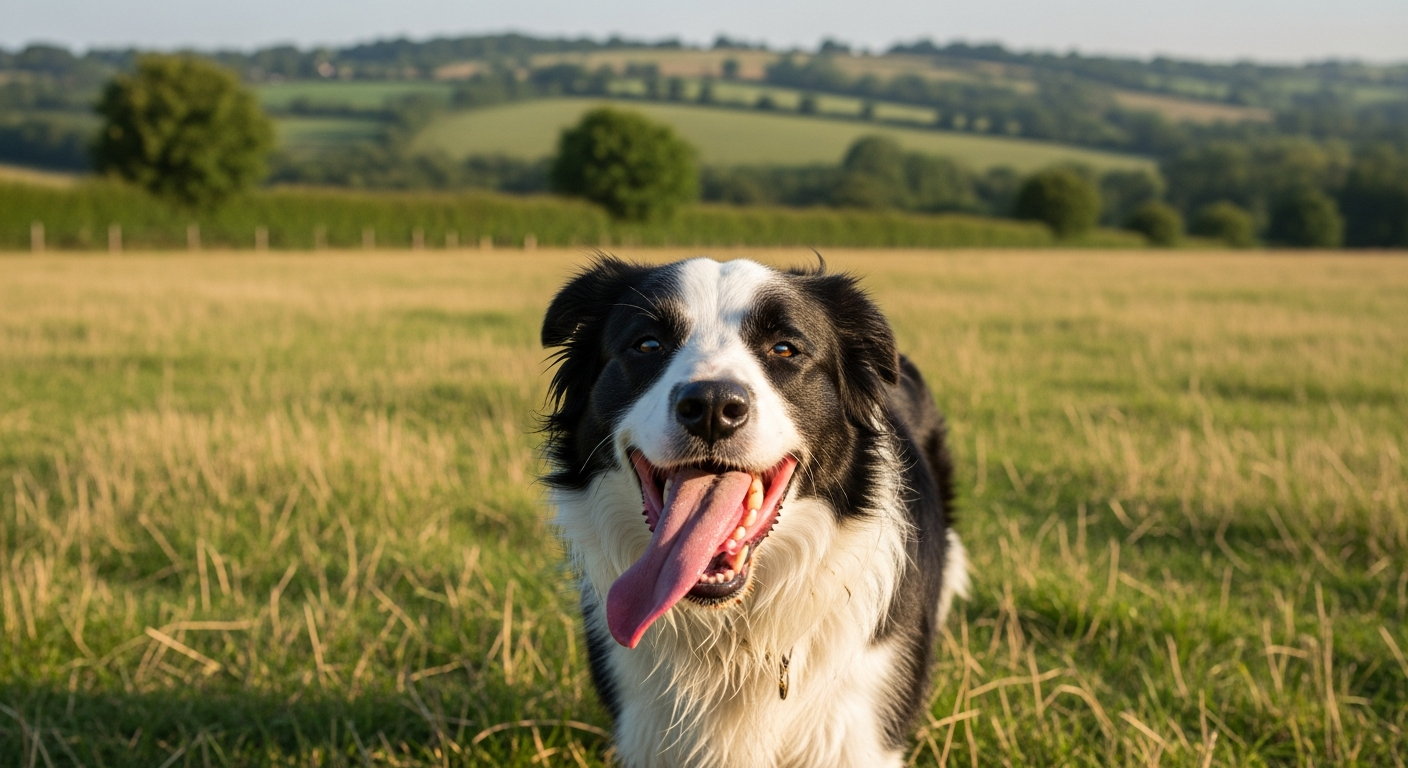
If you work a dog, or you exercise a herding breed hard, you need to understand this condition the same way you understand bloat in large shepherds. It’s not the heat itself that’s the problem. It’s the combination of heat, effort, and the specific physiology of a dog built to run.
What Actually Happens
Dogs don’t sweat efficiently. Their primary cooling mechanism is evaporation from the respiratory tract — panting. That system works well when ambient temperature is below the dog’s core body temperature and the air is dry. It stops working when either of those conditions fails.
Normal canine body temperature sits around 38.3–39.2°C. At 40°C, you have a problem. At 41°C, cellular damage begins. Above 42°C, the cascade that kills dogs is already running: protein denaturation, disseminated intravascular coagulation, gut barrier failure, multi-organ damage. A dog that presents at 43°C with signs of collapse has maybe a 50% chance of surviving, even with aggressive veterinary intervention.
The thing about exertional heat stroke — the working-dog form — is that it doesn’t follow the textbook pattern of a dog left in a hot car. It can happen on a mild day. It can happen in winter. I’ve seen genuine heat stroke in February, in a fit sheepdog being worked too hard by an owner who assumed cold weather ruled it out.
The Risk Factors Owners Underestimate
Brachycephalic conformation. Not a shepherd issue, but worth flagging: flat-faced breeds are in a different risk category entirely. Moving on.
Black or dark coats. A black German Shepherd absorbs more radiant heat than a sable. Not a huge factor in shaded work, but relevant in open sun.
Obesity. Excess body condition is one of the strongest modifiable risk factors identified in UK data. A fat dog fails to dissipate heat and reaches dangerous core temperatures faster.
Age. Older dogs (over 8 years) have roughly twice the risk of younger working-age dogs. Cardiovascular reserve matters.
Recent anaesthesia or illness. The cardiovascular system may not be operating at full capacity for days to weeks after significant intervention.
Fitness level relative to workload. The sedentary family dog asked to do a five-mile hike on the first warm weekend of spring is at real risk. The farm dog that works every day is better acclimatised — but acclimatisation takes roughly 10–14 days of graded exposure.
Humidity. This is the underrated variable. At 25°C with 30% humidity, most dogs cope. At 25°C with 90% humidity, evaporation stalls and core temperature climbs even at rest.
Early Recognition: What You’re Looking For
| Stage | Temperature | Signs | Action |
|---|---|---|---|
| Heat stress | 39.5–40.5°C | Heavy panting, slowing down, seeking shade, bright red gums | Stop work, shade, water, cool surface |
| Heat exhaustion | 40.5–41.5°C | Wobbly gait, disorientation, vomiting, very rapid panting | Active cooling now, ring vet |
| Heat stroke | >41.5°C | Collapse, bloody diarrhoea, seizures, unresponsive | Cool aggressively and transport emergency |
The window between “my dog is a bit hot” and “my dog is dying” is narrower than most owners assume. In studies of working and sporting dogs, the interval between first obvious symptom and collapse has been recorded at under 15 minutes in some cases.
The symptom I want you to notice early is change in gait or coordination. A working dog that starts stumbling, over-shooting turns, or ignoring the whistle is not being stubborn. It’s cognitively impaired. Stop. Now.
The First Fifteen Minutes
Here is where I genuinely disagree with some older advice. Do not use ice or iced water on a hyperthermic dog. The evidence from both human and veterinary medicine is now fairly clear: rapid, aggressive cooling using cool (not cold) water immersion or continuous dousing is the fastest way to drop core temperature. Ice causes peripheral vasoconstriction, which slows core cooling.
The protocol I recommend:
- Move the dog to shade immediately
- Wet the entire coat with cool tap water — a hose, a trough, a stream, whatever is available
- Keep the water flowing. A bucket once is not enough. Continuous cool water down to skin level
- Position in moving air if possible — open car window, fan, breeze
- Offer small amounts of cool water to drink if conscious and not vomiting. Do not force fluids into a collapsed dog
- Transport to a vet as soon as cooling is underway. The target is reducing temperature en route, not finishing cooling before leaving
Dogs cooled before arrival at a veterinary clinic have significantly better survival rates than dogs for whom cooling begins after admission. This is the rare scenario where on-site intervention matters more than speed to the clinic.
Stop active cooling when the rectal temperature reaches 39.5°C. Over-cooling to hypothermia is a real iatrogenic risk.
What Happens at the Clinic
If your dog survives long enough to reach us, the work begins on supportive care. We’re looking for signs of the downstream cascade: renal damage (blood and urine testing), coagulation abnormalities (DIC panel), liver injury, gut barrier disruption (bloody diarrhoea is a bad sign). Dogs with severe heat stroke often look stable at 24 hours and then deteriorate at 48–72 hours as organ damage declares itself. The prognosis discussion happens in stages.
Fluid therapy, plasma support if coagulation is compromised, anti-emetics, gastroprotectants, and careful monitoring are standard. The cost of a severe case can run into four figures. The cost of prevention is a thermometer, a hose, and common sense.
Prevention for Working-Dog Owners
Work in cooler parts of the day during summer months. On days above 25°C, restrict hard work to early morning or evening. Acclimatise dogs gradually at the start of warm season — a few weeks of increasing duration rather than a full day out in the first heatwave. Keep dogs fit but not overweight. Know where every water source is on your usual routes. Carry a rectal thermometer in the truck — the same farm thermometer you use for livestock works fine. And if you’re ever uncertain whether a dog is overheating: stop, cool, and assume the worst. You can always apologise to a healthy dog for an unnecessary rest. You can’t apologise to one that didn’t come home.
Further reading: the VetCompass Programme at the Royal Veterinary College publishes ongoing epidemiological work on heat-related illness in UK dogs, including exertional cases. The American Veterinary Medical Association maintains owner-facing guidance on heat stress that’s broadly consistent with the above.