When a herding breed puppy arrives, it comes with an unspoken promise. This small, serious-eyed creature — already watching you with that particular intensity that marks the herding type from the first weeks — is going to live a decade or more with you. The decisions you make in the first six months have a disproportionate impact on the quality of all those years.
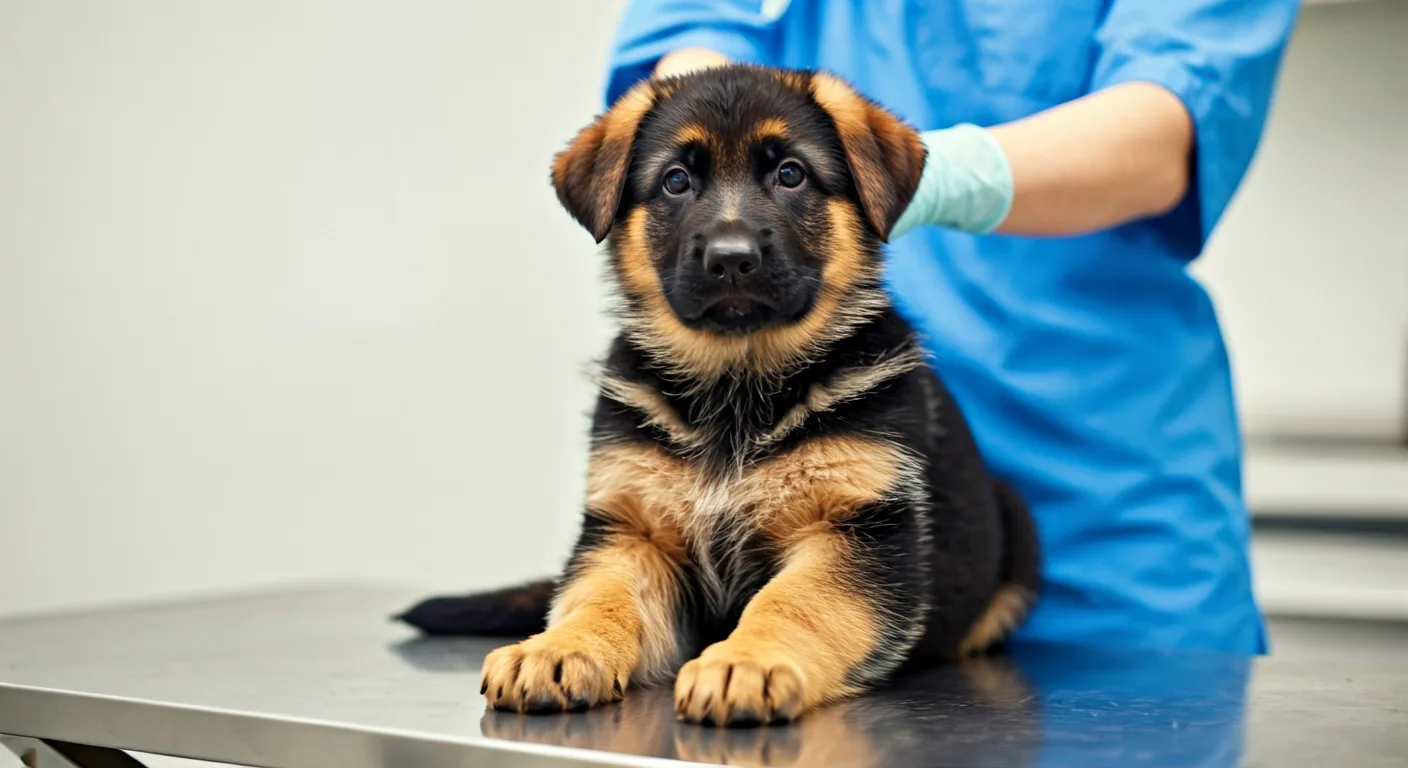
I’ve seen the full range. Puppies brought in at eight weeks looking picture-perfect, trotting in with clear eyes and solid gates, whose owners then received a series of avoidable diagnoses over the following decade because nobody laid the groundwork properly. And I’ve seen puppies brought in with genuine concerns — gut issues, joint queries, vaccination reactions — where early identification made an enormous difference.
Here’s what I actually want herding breed owners to do in the first six months.
The First Veterinary Examination
The first examination should happen before or immediately after the puppy arrives in your home, not weeks later when something goes wrong.
What I’m looking for at this stage:
Overall impression. A healthy puppy is alert and interested. It may be nervous in an unfamiliar place, but it should settle within a few minutes and engage with its surroundings. A puppy that’s flat, disinterested, or avoidant despite calm handling is concerning.
Body condition and weight. Most eight-week-old herding breed puppies should feel well-covered but not chubby. You should be able to feel ribs easily without pressing. A puppy that’s underweight suggests either inadequate nutrition from the breeder or early gut problems; a puppy that’s overweight is being overfed, which matters more than people realise at this stage.
Cardiac auscultation. Heart murmurs at puppy age are relatively common and often benign — what we call “innocent murmurs” that resolve by twelve to sixteen weeks as the heart develops. But some murmurs indicate real structural disease. Every puppy should have its heart listened to properly at that first examination, not just checked off on a form.
Eye examination. For herding breeds, the first eye check is particularly important. Collie Eye Anomaly can be assessed by a vet at this age; for more detailed assessment, referral to an ophthalmologist is worthwhile, particularly in breeds where the prevalence is high. CEA is easiest to spot before the pigment masking that can occur after ten to twelve weeks.
Bite and dental conformation. Malocclusion issues are often visible early. Some will self-correct as the jaw develops; others require intervention. Note what you see at eight weeks and recheck at the twelve-week visit.
Limb examination. I’m not expecting to diagnose hip dysplasia in an eight-week-old puppy — hips simply don’t show their nature that early. But I’m looking at how the puppy moves, whether there’s any limb deviation, whether joints appear normal in gross anatomy.
Umbilical and inguinal hernias. Common, easily spotted, and range from no significance whatsoever to requiring surgical correction.
Parasite check. Most responsible breeders will have wormed puppies before they leave, but a fresh faecal check at first examination tells me whether the treatment was adequate and whether any other parasites are present.
The Vaccination Protocol
Vaccination schedules vary between practices and between countries. What doesn’t vary is the basic principle: herding breed puppies receive an initial course, followed by a booster, followed by regular maintenance.
The core vaccines — distemper, parvovirus, hepatitis, and leptospirosis in the UK — protect against serious, often fatal diseases. They are not optional. Whatever philosophical concerns some owners have about over-vaccination, the unvaccinated puppy in contact with other dogs is at genuine risk.
For herding breeds specifically, a few vaccination considerations:
Reactions are uncommon but real. I’ve written about vaccine reactions in herding breeds in detail, but the summary for puppies is: monitor the puppy for two to four hours after vaccination, keep your vet’s emergency number accessible, and if anything looks wrong — facial swelling, vomiting, sudden extreme lethargy — call immediately. Reactions to puppy vaccinations are rare but not vanishingly so.
Timing and immunity. The reason puppies receive multiple vaccine doses is that maternal antibodies from the dam can interfere with vaccine response. The doses given at eight weeks, twelve weeks, and sixteen weeks (in a typical UK protocol) are designed to catch the puppy at the window when maternal immunity has waned sufficiently for the vaccine to stimulate its own immune response. A single vaccination at eight weeks, particularly in puppies from bitches with high maternal antibody levels, may not achieve lasting immunity.
Kennel cough. Bordatella/parainfluenza vaccination is relevant for any puppy likely to attend puppy classes, dog day care, boarding, or regular social contact with unknown dogs. It’s not always included in the core schedule but is sensible for most herding breed puppies, whose social development benefits from puppy classes.
The MDR1 question. Vaccination itself is unaffected by MDR1 status. The anti-inflammatory drugs sometimes used to manage significant reactions, however, may be affected. Knowing your puppy’s MDR1 status early means this information is available if it becomes relevant during any reaction management. I’ll come back to testing later in this piece.
Social Development: Why This Matters Medically
This section might seem out of place in an article about health checks, but I include it deliberately because the consequences of poor socialisation show up in my consulting room as medical problems.
The critical period for socialisation in dogs runs from approximately three to twelve weeks. During this window, positive, controlled exposure to a wide range of people, animals, environments, sounds, and surfaces shapes the dog’s fundamental assessment of what is safe and what is threatening. A puppy that misses this window — isolated at home awaiting full vaccination clearance, for example — often develops anxiety, reactivity, and fearfulness that affects their wellbeing and, via the stress-gut axis, their physical health for life.
The balance to strike: vaccination status matters and a puppy with no immunity should not be in contact with unknown dogs or unvaccinated animals. But controlled exposure to clean, vaccinated dogs, puppy classes with appropriate health protocols, car travel, meeting adults who handle the puppy gently — this should start from the day the puppy arrives, not wait for full vaccine clearance at sixteen weeks.
The under-socialised herding breed puppy becomes the anxious, reactive adult herding dog. That adult dog often has digestive issues, skin problems exacerbated by chronic stress, and presents for behavioural consultations that could largely have been avoided. I’ve seen this pattern so many times that I consider adequate socialisation a veterinary health issue, not just a training one.
Parasite Control: Getting It Right
Puppy parasite control needs to be appropriate, consistent, and correct for the breed. Herding breeds require specific consideration.
Routine intestinal wormers (for roundworms and hookworms primarily) should be continued from the schedule the breeder started, typically every two to three weeks until three months, then monthly until six months, then based on risk assessment after that.
Tapeworm control depends on whether the puppy has access to rodents, raw meat, or fleas. The standard intestinal wormers don’t cover tapeworms; a combined product or specific tapeworm treatment needs adding if exposure is likely.
Flea, tick, and mite treatments. The range of available products is wide. For herding breed puppies, the MDR1 status is relevant here, particularly for products containing ivermectin or similar compounds. Until you know your puppy’s MDR1 status, some practitioners recommend avoiding high-dose ivermectin-containing products and choosing alternatives. Once the status is known, appropriate product selection is straightforward.
Lungworm (Angiostrongylus vasorum) deserves specific mention. In areas with high slug and snail populations — and in puppies of curious herding breeds that investigate everything they find — lungworm prevention is worth discussing with your vet. It requires a specific product; standard wormers don’t cover it.
When to Get Genetic Testing Done
For herding breed puppies, I recommend the following testing timeline:
MDR1 testing: as soon as possible, ideally before the puppy arrives. The responsible breeder will have tested both parents and provided documentation of the puppy’s likely status. If this wasn’t done, get your puppy tested at the earliest opportunity. The information is genuinely useful from day one, particularly for emergency situations.
Eye testing: clinical examination by eight weeks (by an ophthalmologist if CEA is a concern in the breed), DNA testing whenever convenient after DNA sampling can be done. For CEA, PRA, and other inherited eye conditions with DNA tests available, there’s no reason to wait. A cheek swab can be taken from a young puppy.
Hip scoring: not before twelve months. Hips cannot be validly assessed before this age under the BVA scheme. However, discussions with your vet about hip health — managing growth, appropriate exercise, avoiding excessive jumping in the first year — are relevant from the puppy’s arrival.
Full genetic health panel: any time. Many laboratories offer breed-specific genetic panels that test for multiple conditions simultaneously. For breeds with several known inherited conditions, this is cost-effective and comprehensive.
Nutrition in the First Six Months
Growth nutrition for herding breed puppies is an area where I see meaningful variation in what owners are doing, some of which serves the puppy well and some of which doesn’t.
Large breed puppy formulas matter for large herding breeds. German Shepherds, Belgian breeds, and larger shepherd types should be on large-breed puppy food or an appropriate adult food — not regular puppy food, which typically has calcium and phosphorus levels that drive faster bone growth. Fast bone growth is a risk factor for developmental orthopaedic diseases. This isn’t academic; I see cases that I believe were partly precipitated by inappropriate growth diets.
Border Collies and similar medium-sized herding breeds are less vulnerable to this specific issue but still benefit from measured, portion-controlled feeding rather than ad libitum (free) feeding, which tends to produce rapid weight gain that isn’t always followed by corresponding frame development.
Introducing puppies to a variety of proteins in the first six months, if the gut tolerates it, can reduce the likelihood of developing strong food intolerances later. The herding breed gut is something I pay attention to from the start — a puppy with consistently loose stools or intermittent vomiting needs assessment rather than reassurance, because early gut problems often presage the chronic digestive issues that herding breeds are prone to.
What I Want You to Remember
The first six months are disproportionately important. The decisions made in this window — vaccination, socialisation, parasite control, genetic testing, nutrition — shape the baseline from which everything else follows.
The best herding breed owners I know treat the puppy period as an investment in the adult dog they want. They don’t delay vaccinations because the puppy seems healthy. They don’t skip genetic tests because the breeder said the dog should be fine. They don’t skip socialisation because the puppy seems shy. They do the work early, when it costs least and means most.
Twenty-five years of watching herding breeds has taught me that the dogs that do best are almost always the ones whose owners started right. You’ve got a remarkable animal in your home. Start as you mean to go on.