There’s a conversation I have regularly, probably once a week on average, that goes something like this.
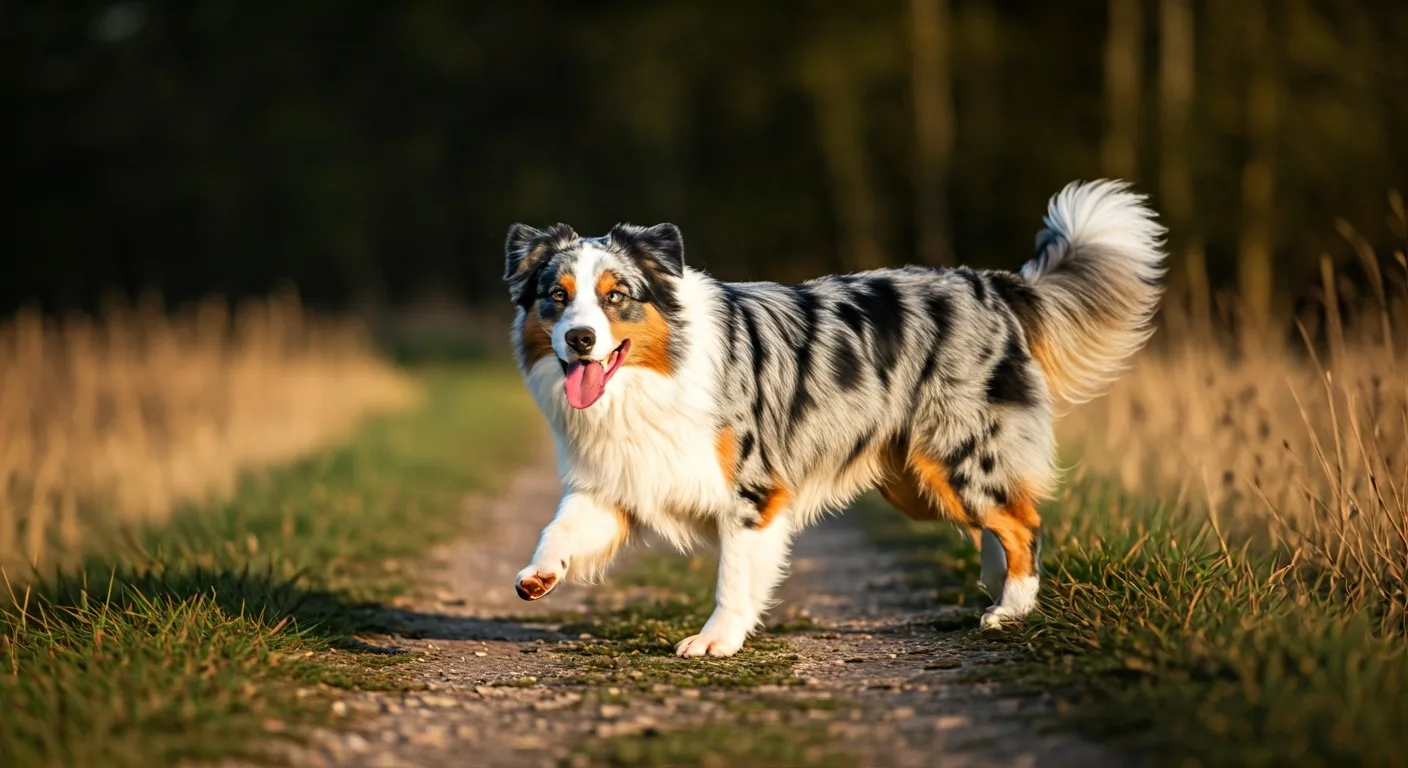
The dog comes in for a routine appointment. It’s a Border Collie or German Shepherd or similar, clearly loved, well-exercised by most standards, coat in reasonable condition. I do the examination, run my hands over the ribs, look at the waist from above and the tuck from the side.
“Your dog is overweight,” I say. “Probably by three or four kilos.”
The owner looks at me as though I’ve said something offensive. Their dog is active. Their dog does agility, or works sheep, or runs five miles a day. Their dog is definitely not fat.
I understand the reaction. But I also see the consequences of it, day after day, in the joints I’m treating, the surgeries I’m performing, and the quality of life assessments I’m having with owners of dogs that aged faster than they needed to.
The Scale of the Problem
Canine obesity is a genuine public health issue. Depending on the study you read, somewhere between 40% and 60% of pet dogs in the UK and US are overweight or obese. In herding breeds specifically, I’d say the working lines tend to be kept leaner than show or pet lines, but even in working populations I see a lot of dogs carrying more weight than serves them well.
Part of this is anthropomorphism. A plump dog looks comfortable, well-fed, cared for. A lean dog — genuinely lean, ribs clearly palpable under a thin covering of fat, visible waist, abdominal tuck — looks to many owners like it might be hungry. That’s a cultural artifact of living in food-abundant environments, not a veterinary reality.
The body condition score (BCS) system that vets use rates dogs on a scale of 1–9, where 1 is emaciated and 9 is obese. The ideal is 4–5. Most pet owners, when shown the standard reference charts, put their dog at one to two points below their actual score. The dog they think is a 5 is often a 6 or 7.
What Excess Weight Actually Does to a Working Dog
I want to be specific here, because “excess weight is bad” is the kind of thing people hear and agree with abstractly without acting on.
Joints. Every kilogram of excess bodyweight is estimated to add somewhere between four and eight kilograms of force to the major joints — hips, elbows, stifles — with every step. For a working Border Collie doing 10,000 steps a day, carrying three extra kilos means somewhere in the region of 30,000 to 80,000 additional kilograms of cumulative joint load per day. Over years, that adds up to measurable increases in arthritis development, cartilage degradation, and clinical lameness.
For dogs with known joint issues — hip dysplasia, elbow dysplasia, any of the conditions I’ve written about in managing hip dysplasia in herding breeds — excess weight is not just an additional risk factor. It’s the difference between adequate quality of life and significant disability.
Cardiovascular and respiratory function. Obese dogs have reduced exercise tolerance, impaired respiratory efficiency, and increased cardiac load. Working dogs are asking their cardiovascular systems to perform; excess adipose tissue makes that harder at a fundamental physiological level.
Metabolic function. Adipose tissue isn’t inert storage. It’s metabolically active, producing inflammatory cytokines and hormones that drive systemic low-grade inflammation. An overweight dog is running a low-level inflammatory process continuously. For breeds already prone to seasonal allergies and skin conditions, this background inflammation can make allergic disease significantly harder to manage.
Longevity. The Purina lifespan study — a long-running research project that has become a landmark reference in veterinary nutrition — found that dogs kept lean throughout their lives lived on average 1.8 years longer than dogs allowed to be overweight. For a breed with a 12-year average lifespan, that’s a meaningful addition. Not additional months of declining health, but additional years of active life.
Surgical risk. Overweight dogs are more difficult to anaesthetise, have more operative complications, take longer to recover, and have higher rates of surgical site infections. Every elective procedure I do on an overweight dog carries higher risk than it would on the same dog at ideal condition. Emergency surgery on an obese dog at two in the morning is one of my least favourite situations.
What Ideal Condition Actually Looks Like
Let me be concrete about this, because the standard “ribs should be palpable” advice is too vague to be useful.
At ideal body condition for a herding breed:
Ribs should be easily felt with gentle finger pressure, with a smooth layer of fat over them roughly equivalent to the depth of the back of your hand. You should not need to press. If you have to push to find the ribs, the dog is overweight.
Waist should be clearly visible from above — the body should narrow distinctly behind the rib cage before widening again at the hips. No waist visible means overweight.
Abdominal tuck should be visible from the side — the abdomen should angle upward from the front legs to the hind legs. A flat or pendulous belly indicates excess fat.
Hip bones and spine should be palpable but not prominently visible. If they’re jutting out visibly, the dog may be underweight.
For working dogs — particularly Border Collies in serious work — I actually lean toward the lower end of the ideal range. A working Collie at BCS 4 (slightly lean for a pet dog) functions better than the same dog at BCS 5. Working ability requires a power-to-weight ratio that favours leanness.
Why Working Owners Underestimate Weight
There are a few specific reasons that working dog owners, counterintuitively, often have overweight dogs.
Activity doesn’t offset diet as much as people assume. An extra hour of herding per day burns perhaps 200–400 additional calories. A handful of extra treats, a slightly generous portion, or a high-calorie training reward easily replaces those calories and more. Dogs compensate for increased activity by being slightly less active during rest periods. The arithmetic of exercise as a weight control strategy is much less favourable than people expect.
Working dogs get fed rewards. Training and working with high-value food rewards is entirely reasonable and effective. But those calories count. A working trial or agility session where a dog receives a significant quantity of high-value treats can add several hundred calories to their intake for that day. If the base ration isn’t reduced to account for this, slow weight gain is inevitable.
We feed more when we work harder. There’s an intuitive logic to giving a dog more food when they’re working hard. It often isn’t supported by the physiology. Many working dogs have more efficient metabolisms than their sedentary counterparts and don’t require as much additional fuel as owners assume. Weigh your dog regularly rather than feeding by intuition or by how hard they seem to be working.
Practical Weight Reduction Strategies
If your dog is already overweight, here’s what I find actually works in practice.
Measure food precisely. This is the single most impactful change most owners can make. Feeding by sight — “a couple of scoops” or “about this much” — almost always results in overfeeding. Use a kitchen scale. Weigh every meal for at least the first month until you have genuine calibration. The difference between 200g and 250g doesn’t look significant in the bowl but amounts to 25% more food.
Reduce by 20–25% and reassess monthly. I don’t recommend dramatic calorie cuts. A 20–25% reduction from current intake is effective and doesn’t leave working dogs without adequate energy for their work. Reassess monthly, adjusting the target based on progress.
Separate training treats from daily ration. Weigh out the training treats and count them as part of the day’s calories. A useful rule of thumb: training treats should come out of the daily ration rather than being added to it.
Use the diet for low-calorie enrichment. For dogs that eat quickly and seem hungry, using a portion of the daily kibble ration for enrichment activities — scatter feeding, snuffle mats, slow feeder bowls — makes the same quantity of food feel like more. It also provides mental stimulation that working breeds need, addressing the stress and anxiety aspects that can drive scavenging behaviour.
Weigh the dog regularly. Monthly at minimum. If your vet’s scales are the only ones available, pop in for a quick weight check between appointments. Most practices are happy to let you do this without a full consultation charge. A trend line of weights is far more useful than a single snapshot.
Be honest with everyone in the household. If one family member is maintaining careful portion control and another is slipping the dog scraps from every meal, the weight management programme will fail. Getting everyone on board is not a soft skill — it’s a clinical requirement.
The Senior and Arthritic Dog
I want to specifically address the older dog with joint disease, because this is where weight management has the highest impact and where owners most need encouragement to maintain it.
A twelve-year-old German Shepherd with arthritis that’s three kilos over ideal body weight is in significantly more pain than the same dog would be at ideal weight. The joints are already compromised; every gram of excess weight is an additional insult.
In senior dogs, the metabolic rate drops, the activity level drops, and the caloric requirement drops — but appetite often doesn’t. A dog that ate 400g per day at age five may need 300g or less at age eleven to maintain ideal condition. Feeding based on what they used to eat, or what the packet suggests, is a recipe for slow but steady weight gain.
When I’m managing pain in an arthritic herding breed, weight assessment and management is part of the clinical plan, not an optional extra. Getting a dog to lean condition sometimes reduces pain scores more than the NSAID does. I am not exaggerating.
The Conversation I Now Have
When I tell an owner their dog needs to lose weight, I try to frame it as what it is: an investment in their dog’s future. Not a criticism of their care, which is usually excellent in every other respect.
The dog you keep lean will have better joints for longer, fewer secondary health problems, easier surgical recoveries if they need procedures, and — very likely — additional years of active life.
A few less biscuits per day. A slightly emptier bowl. A slightly more prominent waist.
It’s a small adjustment that pays dividends over an entire lifetime. Most dogs, when they get there, are also more energetic, move more freely, and seem genuinely happier at ideal condition than they were carrying the extra weight.
Your dog’s health is your responsibility, and this particular responsibility is one of the most straightforward and highest-value things you can act on. You just have to be willing to say no to the face at the dinner table.
That’s harder than it sounds. But it’s worth it.